Video
The Competency Gap in the Foreclosure Chain
Everyone in the foreclosure chain is licensed, registered or commissioned, and none of those credentials tests the rules that govern a loan after it is sold....
A working paper for attorneys, trustees, originators, servicers, housing counselors and courts: an eight-point framework for recognizing a defective security interest in a post-transfer file, with findings from 145 scored burden elements.
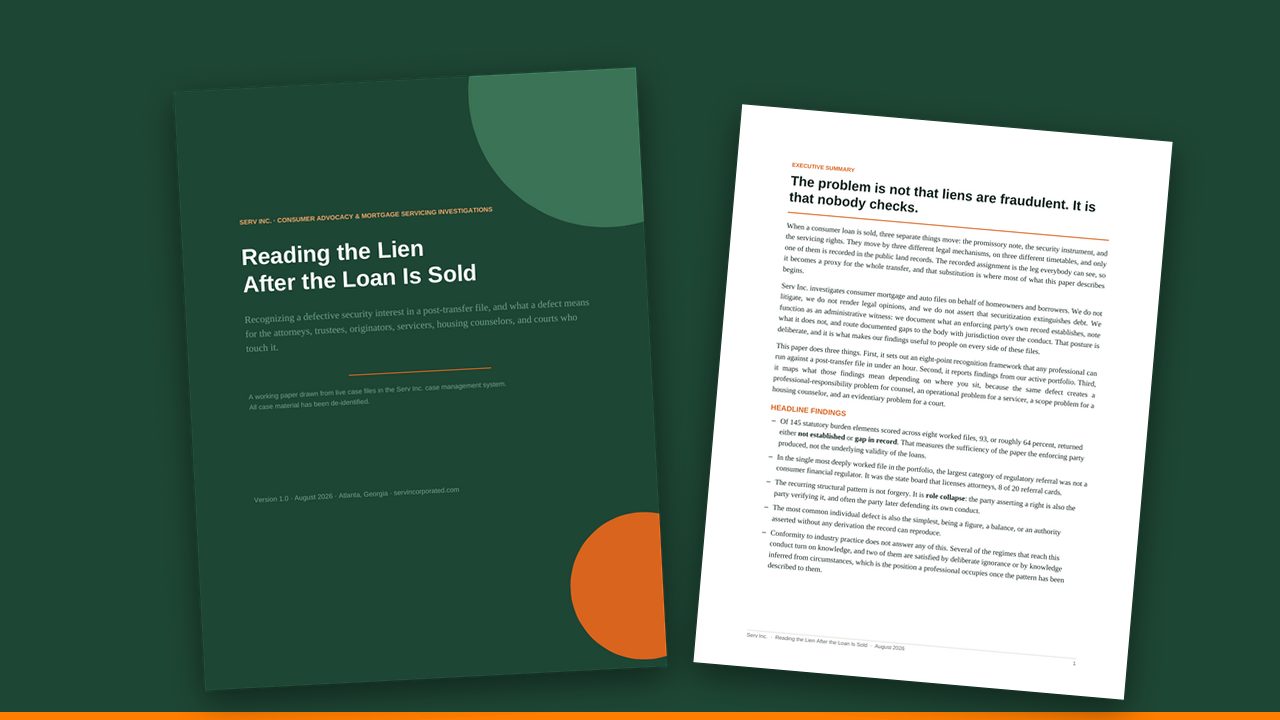
When a consumer loan is sold, three separate things move: the promissory note, the security instrument and the servicing rights. They travel by three different legal mechanisms on three different timetables, and only one of them is recorded in the public land records. The recorded assignment becomes a stand-in for the whole transfer, and most of the defects this paper describes begin with that substitution.
The paper is drawn from live case files, all de-identified. It gives any professional a framework that can be run against a post-transfer file in under an hour, reports what our active portfolio shows, and maps what a documented defect means for counsel, servicers, housing counselors and the bench.
Serv Inc. works as an administrative witness. We document what an enforcing party’s own record establishes, note what it does not, and route documented gaps to the body with jurisdiction over the conduct. We do not litigate or render legal opinions, and we do not take the position that securitization extinguishes a debt. A documented gap can be answered by producing the missing document, which is what makes the findings useful to people on every side of a file.
Tell us where to send follow-up research, and the download starts right away.
We use your email to send this and related Serv Inc. research. See our privacy policy.
Everyone in the foreclosure chain is licensed, registered or commissioned, and none of those credentials tests the rules that govern a loan after it is sold....
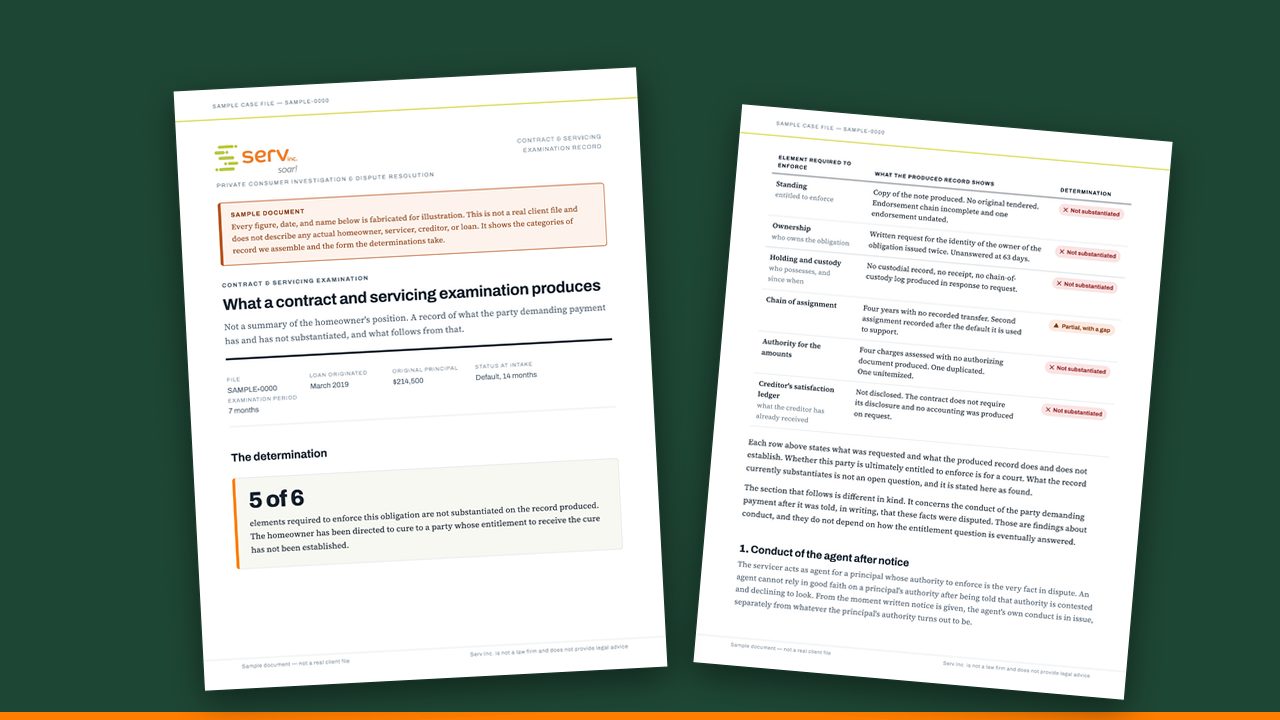
See the form our findings take. This sample walks through a complete examination record, from the determination on each element to the charge-by-charge audit. Every figure...
A Georgia foreclosure sale has to be preceded by a written notice mailed at least 30 days ahead. Here is what the law requires that letter...
About two emails a month, with our latest research on mortgages, foreclosure and pooled debt. Unsubscribe with one click.
Upload your documents and we will send a free summary of what the record establishes, what is missing and why it matters.