01
The chain of recorded documents
We pull the recorded instruments and line them up in order, so every gap is visible.
County land records
Every mortgage, assignment, release and lien on your property is supposed to be recorded in the county's land records. When loans are sold and resold, steps get skipped: a release never recorded, an assignment missing, a document signed by a party with no authority. Those gaps stay on your title until someone finds them.
These records decide what you owe and who can collect it. They are rarely sent to you, and almost never explained. We request them, examine them and tell you in plain language what they prove and what they do not.
We pull the recorded instruments and line them up in order, so every gap is visible.
When a mortgage is paid off, state law gives the lender a deadline to record a release. We document whether one was recorded and when.
We check who signed each assignment or release and whether the record shows they had the authority to.
The right to enforce the note and the recorded mortgage should end up in the same hands. We document where the record shows each one went.
Old judgments, paid debts and satisfied loans sometimes stay on title. We identify them and prepare the request to have them released.
We do not promise results, and every file depends on what its records show. When a dispute is documented and pursued properly, these are outcomes it can produce:
Our white paper sets out how we read a lien after a loan has been sold, and the sample report shows what a finished examination looks like.
An eight-point framework for recognizing a defective security interest in a post-transfer file, with findings from 145 scored burden elements. Written for attorneys, trustees, originators, servicers, housing counselors and courts.
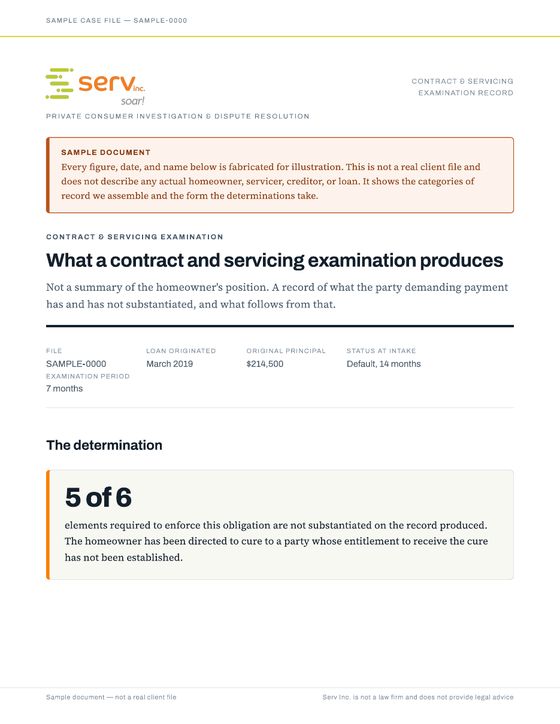
Get the white paperA complete sample examination record, with every figure made up for illustration. It shows the determination on each element the other side has to establish, the charge-by-charge audit, the response deadlines, and what a homeowner can do with the result.
Open the sample reportIt is any recorded document, or any gap in the recorded documents, that raises a question about who owns the property or what is owed against it. Common examples are an old mortgage that was paid and never released, a missing assignment, and a lien recorded against the wrong person.
Send the lender or servicer a written request for the release, with proof of payoff. State law sets a deadline for recording a release after payoff, and many states add penalties for missing it. We prepare the request, track the response and document the record.
No. A quiet title action is a lawsuit filed in court, by you or your attorney. We examine the recorded chain and prepare the record a quiet title case is built on.
Yes. It decides who can enforce a loan against the property and what your heirs or a buyer will face later. It is easier to correct before a sale, a refinance or an estate is waiting on it.
Upload your documents and we will send a free summary of what the record establishes, what is missing and why it matters.