01
What the lease authorizes
We read the lease and every addendum and list the charges each one supports.
Your lease and addenda
Many single-family rental homes are owned by companies that pool thousands of houses and sell securities backed by the rent. The lease you signed, the addenda added later and the ledger behind your online portal decide what you owe. Most tenants never see how those fit together. We examine them.
These records decide what you owe and who can collect it. They are rarely sent to you, and almost never explained. We request them, examine them and tell you in plain language what they prove and what they do not.
We read the lease and every addendum and list the charges each one supports.
A ledger shows whether your payment went to rent or to fees first, which can turn an on-time rent payment into a late one. We reconcile it line by line.
Many states and cities limit late fees, require notice before rent or fees change, or regulate utility billing. We identify the rules that apply where you live.
We document the owner of record and the manager, so notices and complaints go to the party responsible.
A notice demanding payment has to state an amount. We check that amount against the ledger and the lease.
We do not promise results, and every file depends on what its records show. When a dispute is documented and pursued properly, these are outcomes it can produce:
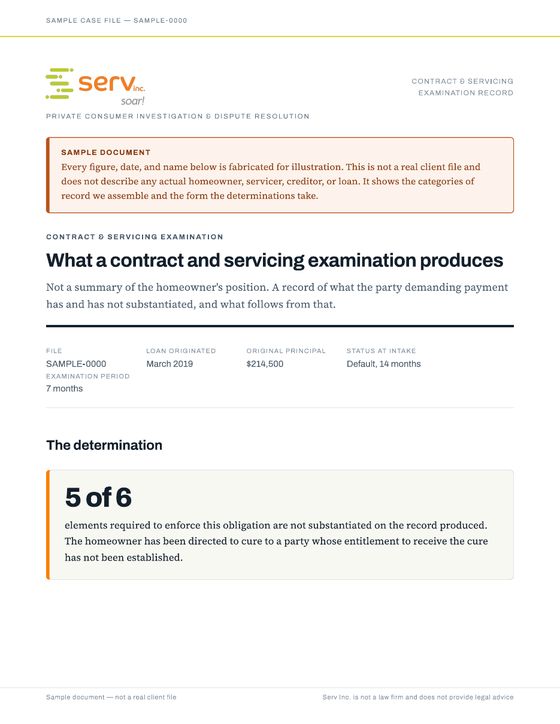
This sample is a mortgage file, with every figure made up for illustration. We examine a lease and a rent ledger the same way: each charge, the term that is said to allow it, what the record shows, and a plain determination on every line.
Open the sample reportA charge generally has to be supported by the lease, an addendum you agreed to, or the law. Whether a specific fee is allowed depends on your lease and your state. We list each charge on your ledger next to the lease term that supports it, and mark the ones with no support.
The owner of record is in the county's property records, and it is often a company with a name you will not recognize. We document the owner, the manager and how they relate.
Notices have short deadlines, and an eviction case moves quickly. We can check the amount demanded against your lease and ledger right away and put the result in writing. For the court case itself, contact a tenant attorney or a legal aid office in your area.
No. The same review works for any rental where a lease, its addenda and a ledger decide what you owe.
Upload your documents and we will send a free summary of what the record establishes, what is missing and why it matters.